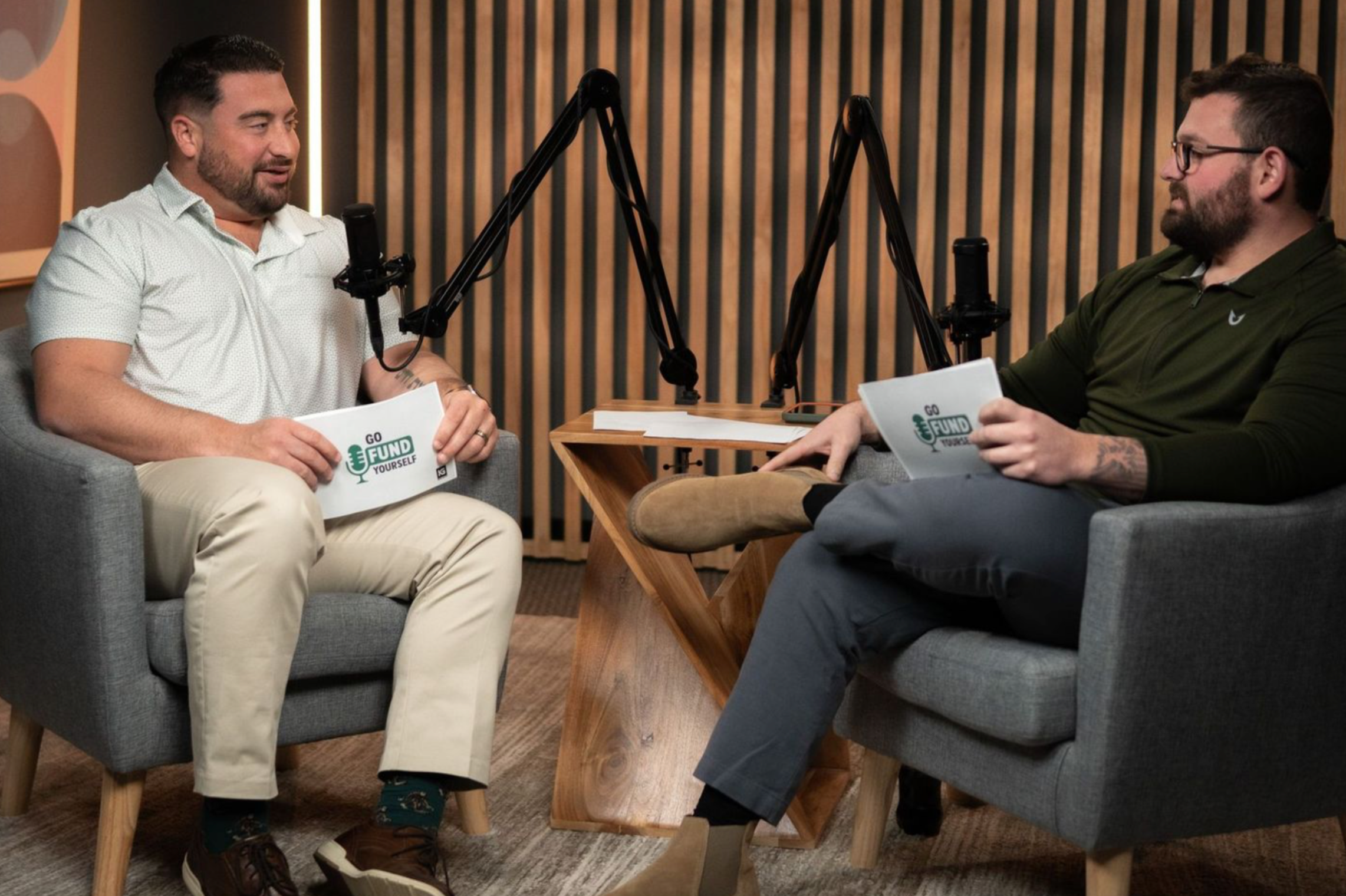
A nonprofit director writes a $10,000 check to a grant consultant. Three months pass with no proposals sent, no funder conversations started, and no updates returned. The consultant vanishes with the retainer, and the organization absorbs a loss from a budget already stretched past its limit. Stories like these repeat across the nonprofit sector every year, and Jared Krieger hears them constantly. On the first episode of Go Fund Yourself, Jared and his co-host Matt Goodman broke down why the grant industry stays broken, who profits from nonprofit confusion, and what a consulting relationship should look like when both sides share the risk. Jared founded KG Strategic Consultants on the belief that grant writers should put their money on the line alongside the organizations they serve. This blog expands on the conversation they started. Nonprofits seeking a grant writing firm deserve to know what distinguishes a real partner from a vendor collecting fees. The difference comes down to shared financial risk, honest assessment of readiness, and a willingness to say no when the truth matters more than a signed contract. Too many consultants profit regardless of the outcome. Too many nonprofit leaders blame their own missions when the failure belongs to a system designed to keep them confused. Understanding those incentives is the first step toward finding a partner willing to work differently.
Why Does the Grant Industry Profit From Nonprofit Confusion?
The answer is complexity. It creates demand for intermediaries who charge for access to information and processes available to anyone willing to dig. The more opaque the system stays, the more money gatekeepers collect from organizations too overwhelmed to push back.
The Cost of a System Without a Universal Playbook
No two grant programs follow the same rulebook. The differences start at the federal level, spread through every state legislature, and splinter again across thousands of private foundations making decisions by their own standards.
- Federal grants are subject to 2 CFR 200, known as the Uniform Guidance, with strict procurement and reporting rules.
- State grants follow state procurement laws, and requirements shift from Maryland to Florida to California, with no guarantee of overlap.
- Private foundations write their own eligibility criteria, timelines, and evaluation rubrics with zero obligation to match anyone else’s format.
- Corporate grants function as marketing budgets wrapped in paperwork, with priorities tied to brand strategy rather than public benefit.
On top of that structural mess, the language changes depending on who is giving the money. “Capacity building” means staff development to one funder and facility expansion to another. “Indirect costs” refer to overhead and administrative spending, but every agency calculates the rate differently. “Match requirement” splits into cash match, in-kind match, and third-party match depending on the program. A nonprofit director searching “how to get a grant” online finds ten different answers because ten correct answers exist simultaneously. The confusion is not a bug. For certain players in this industry, the confusion is the business model.
Who Benefits When the Process Stays Opaque
A whole ecosystem of intermediaries profits from nonprofit confusion, and most of them face zero accountability for results.
- Traditional consulting firms charge $5,000 to $15,000 in upfront retainers. Whether the nonprofit receives an award or walks away empty has no effect on the consultant’s revenue.
- Grant databases like GrantStation and Candid charge $500 to $2,000 per year for access to information already available through public sources at no cost.
- “Grant writing certification” programs market credentials backed by no industry-recognized standard. A certificate on someone’s wall does not prove they know how to win funding.
None of these players loses money when a nonprofit fails to get funded. The fees are collected upfront, the subscriptions renew annually, and the certifications keep selling regardless of outcomes. When a small organization struggles to access grant money, the failure gets pinned on size or inexperience. The more honest explanation is information access. Large institutions carry decades of funder relationships, dedicated compliance staff, and institutional memory built across hundreds of prior applications. A first-time applicant walks in with none of those advantages, and the system does nothing to close the gap.
What Happens When Nonprofits Hire the Wrong Grant Consultant
The wrong hire costs money, time, and credibility in a sector where all three run in short supply. For organizations already operating on thin margins, one bad engagement creates damage that outlasts the invoice.
Paying for Promises With No Results
Under the retainer model, every dollar of financial risk falls on the nonprofit. A consultant receives payment upfront, begins work on a timeline the client rarely controls, and delivers results on a schedule with no guaranteed outcome. For an organization with a $200,000 annual budget, a $10,000 retainer represents five percent of total operating costs committed before a single proposal reaches a funder’s desk.
When the engagement fails, the nonprofit absorbs the loss, and the consultant moves to the next client. Across the sector, stories of firms promising millions in grant awards and then vanishing with retainer payments are not rare. They are common enough to erode trust in the entire consulting industry. Organizations burned by these experiences become hesitant to seek professional support even when a skilled partner would make a measurable difference. The damage is not limited to the budget. A bad consultant poisons the well for every qualified firm that comes after.
Why Mission Quality Gets Blamed for System Failures
After a failed engagement, nonprofit leaders often internalize the outcome. They assume their programs were too small, their budgets too limited, or their missions too niche to attract funder interest. In most cases, none of those conclusions hold up under scrutiny.
The real dividing line between funded and unfunded organizations is institutional knowledge.
- Established nonprofits with twenty years of grant history know which funders prioritize which categories and how to align proposal language accordingly.
- Experienced teams understand how to frame an ask around funder priorities rather than internal terminology.
- Organizations with prior awards carry a track record that reviewers weigh heavily during scoring.
A first-time applicant competing against these teams does not lose because the mission falls short. The loss comes from a knowledge gap baked into the structure of the funding process. No amount of passion fills in for missing systems, missing documentation, or missing relationships with program officers. Blaming the mission is easier than confronting a broken system, and that misplaced blame keeps organizations from seeking the right kind of help.
What Does a Grant Writing Partner Owe Your Organization?
Financial alignment with your outcome, an honest assessment of your readiness, and full accountability from proposal development through post-award compliance reporting. Anything less is a vendor relationship dressed up in partnership language.
Financial Risk Should Flow Both Directions
A post-payment model flips the traditional consultant relationship entirely. Under this structure, the grant writer receives compensation only after the nonprofit secures a funded award. The consultant assumes financial risk alongside the client, and both parties carry a direct stake in the result.
This structure changes behavior on both sides. Consultants operating on post-payment terms invest their time selectively, choosing organizations with genuine readiness and missions aligned to available funding. Nonprofits working with a post-payment partner know the person writing their proposals has financial motivation to produce winning applications every single time.
The contrast between the two models makes the incentive problem impossible to ignore.
The retainer model puts all financial risk on the nonprofit. The consultant profits regardless of outcome. Whether the grant is awarded or denied, the fee is still collected. No built-in accountability exists after the check clears.
The post-payment model distributes financial risk across both parties. The consultant profits only when the nonprofit wins an award. Both sides carry financial motivation to produce a successful proposal. Accountability runs from the first conversation through the final compliance report.
When a consulting firm puts revenue on the line, the relationship shifts from transactional to collaborative. Both sides need the proposal to succeed, and both sides invest accordingly. A partner who refuses to share your risk is not acting like a partner.
Honest Assessment Over False Hope
A strong partner tells a nonprofit when the organization is not ready to apply. Saying no protects both parties. A premature application wastes time and resources, and a poorly prepared submission damages your credibility with funders who remember messy first impressions long after the rejection letter goes out.
Grant readiness demands specific internal conditions before any proposal work begins.
- Confirmed nonprofit status, such as 501(c)(3) designation
- Clean, current financial records with recent audited or reviewed statements
- Active board governance with documented meeting minutes and written policies
- Program data showing measurable outcomes rather than aspirational projections
When an organization lacks these foundations, a responsible partner redirects energy toward building readiness instead of rushing a premature application. Selling false hope generates short-term revenue for the consultant and long-term credibility damage for the nonprofit. A partner with a savior complex will tell you everything you want to hear. A partner with accountability will tell you what you need to fix first.
Taking Control of Your Funding Strategy
Building Readiness Before Chasing Applications
Grant readiness does not require a full organizational overhaul. One dedicated staff member or volunteer focused on preparation opens doors that most organizations assume are permanently closed. The work starts with internal systems built over weeks, not years.
- Financial tracking tools aligned with funder reporting requirements
- A program measurement framework showing both outputs and outcomes
- A grant calendar mapping deadlines, eligibility windows, and funder priorities across the full fiscal year
- A documentation folder containing your mission statement, organizational history, letters of support from community partners, and financial records from the past two fiscal years
Once those systems are in place, opportunities become visible in ways they were not before. The Nonprofit Security Grant Program alone distributes $305 million annually to protect houses of worship, community centers, and other nonprofit facilities. Programs at this scale exist across dozens of categories, from youth development to environmental conservation, and most small organizations never apply because they assume the funding is reserved for larger institutions. Readiness closes the gap between assumption and action.
Owning the Relationship With Your Consultant
Even with a partner handling writing and strategy, your organization drives the process. Ownership means responding to documentation requests on deadline, staying engaged during the writing phase, and maintaining communication throughout compliance and reporting after an award comes through.
Funded organizations do not wait for a consultant to fix everything. Grant strategy works best as an internal priority with outside support built around clear expectations. Showing up to meetings prepared, asking questions about funder requirements before deadlines arrive, and holding a partner accountable are baseline behaviors, not bonus efforts. Organizations getting funded year after year expect that same accountability returned to them.
Choosing a grant writing partner is a financial decision, a strategic decision, and a trust decision made in the same moment. The right partnership produces results because both sides invest, stay transparent, and refuse to accept nonsense as the cost of doing business. Stop waiting for someone to hand you permission. Take control of the strategy and bring in a partner who puts their money where their mouth is. Jared and Matt cover all of this, and more, on the first episode of
Go Fund Yourself, and upcoming episodes go deeper into how funders think, what grant readiness looks like in practice, and why the system rewards preparation over desperation.